Buying luxury on Pelican Lake is not just about finding a beautiful house with a big view. It is about making sure the shoreline, access, future use, and long-term upkeep all fit the way you want to live on the lake. If you are weighing a second home, a year-round retreat, or a high-end legacy property in Otter Tail County, this checklist will help you look beyond the photos and ask smarter questions before you write an offer. Let’s dive in.
Start With the Lake Itself
Pelican Lake is a large lake near Pelican Rapids in Otter Tail County, and its size shapes the ownership experience. Minnesota DNR survey data lists about 3,986 acres of lake area, 17.09 miles of shoreline, a maximum depth of 55 feet, and a maximum fetch of 5.77 miles. In simple terms, not every stretch of shoreline will feel the same when it comes to views, wind, wave action, and boating conditions.
Two state public accesses also matter when you compare luxury properties. The DNR notes one access off County Road 31 on the east shoreline and another off County Road 9 on the southwest shoreline. If privacy, quiet approach routes, or lower nearby traffic are high on your list, location along the lake deserves close attention.
Pelican Lake also appeals to buyers who want more than scenery. DNR survey and stocking information shows a fishery that includes walleye, yellow perch, bluegill, and muskellunge, with recent stocking of muskellunge fingerlings and walleye fry in 2024. That makes this a strong fit if your lake lifestyle includes boating and fishing, not just sunset views.
Review Lake Data Before Touring
Before you fall in love with a listing, review the lake information available through the Minnesota DNR’s LakeFinder. It brings together lake maps, surveys, water-quality information, water-clarity data, aquatic plant surveys, and fish-related details in one place. That gives you a more complete picture than listing photos alone.
This step is especially useful for luxury buyers comparing multiple shorelines or lot types. A home may look ideal online, but the lake data can help you spot differences in depth, vegetation, access, and overall conditions before you spend time on a private showing. It is one of the easiest ways to start your due diligence early.
Check the Shoreline First
The biggest mistake many lakeshore buyers make is assuming they can change the shoreline later. Minnesota DNR guidance emphasizes preserving or restoring natural shoreline vegetation because it helps hold soil in place, reduces runoff, filters nutrients, and supports habitat. A shoreline that already has a healthy natural buffer can be a long-term asset, even if it looks less manicured than a broad lawn.
By contrast, heavily cleared shoreline can come with more vulnerability. The DNR notes that shorelines cleared into large lawn areas are more exposed to erosion and water-level stress. For a luxury buyer, that means the best lot is not always the one that looks the most open on day one.
When you tour a property, focus on three simple questions:
- Is the shoreline naturally buffered or heavily altered?
- Is the slope manageable for everyday access and maintenance?
- Are there visible signs of erosion, ice damage, or hard armoring?
These details affect both enjoyment and future cost. If a shoreline already shows stress, your ownership experience may involve more permitting, more planning, and more upkeep than you expected.
Understand Slope and Bluff Limits
A dramatic lake view can be a major selling point, but it can also come with restrictions. DNR shoreland guidance says steep slopes average 12% or more over a 50-foot horizontal distance. A bluff is generally a slope draining toward water with an average grade of at least 30% over a rise of at least 25 feet.
That matters because steep slopes and bluffs can affect where you build, how you access the water, and what future improvements may be possible. If you are considering a premium lot with elevation, ask early whether a surveyor should help define bluff boundaries. On luxury property, the best view is only part of the story. The buildable and maintainable area matters just as much.
Confirm Shoreland Rules Early
Local regulation is a major part of lakeshore buying in Otter Tail County. The county’s shoreland district extends 1,000 feet from the ordinary high-water level of a lake, and local zoning administers the shoreland rules. That means future plans for a deck, patio, addition, garage expansion, or shoreline project should be checked against county standards before you assume they will work.
This is one reason luxury buyers should think beyond the existing structure. A home may meet your needs today, but the real value often depends on what the property can support over time. If your vision includes expanded outdoor living or additional structures, that due diligence should happen before closing, not after.
Plan for Views and Privacy
A great water view and long-term privacy do not always mean the same thing. DNR guidance allows limited clearing and trimming in certain sensitive shoreland areas to create a water view from the principal dwelling and to allow access paths, stairways, landings, lifts, and picnic areas. At the same time, intensive clearing is prohibited in those areas.
For you, that means a view created by heavy cutting may not be as durable as it seems. A more protected view corridor can offer better long-term confidence because it aligns with the rules that preserve shoreline vegetation. If privacy matters, look carefully at existing tree cover, neighboring sightlines, and how much of the current setting depends on altered vegetation.
Verify Space for Extras
Luxury buyers often want more than a main house. You may be imagining a sauna, a small pavilion, or a guest space for family visits. Pelican Lake properties can sometimes support those features, but shoreland standards place real limits on size, height, setbacks, and utility connections.
State guidance says one water-oriented accessory structure may be allowed within the setback if it is no larger than 250 square feet, at least 10 feet from the ordinary high-water level, under 10 feet tall, and not connected to sewer or water. The same guidance notes that guest cottages may be possible only if lot-size requirements are met, with a general cap of 700 square feet and 15 feet in height, subject to local verification.
County rules also affect additions and outbuildings. Otter Tail County lists added setbacks of 30 feet from the top of a bluff and 10 feet from a property line in general, with some smaller accessory structures allowed 5 feet from a property line and water-oriented accessory structures needing 10 feet. If you want a property that evolves with your family over time, these measurements matter.
Watch Impervious Coverage
Outdoor living is a big part of luxury lake ownership, but hardscape has limits. The DNR notes a statewide impervious surface limit of 25% of lot area within shoreland, and county rules also regulate impervious coverage. Patios, driveways, retaining areas, and other hard surfaces can add up faster than many buyers expect.
This is a smart item to review before you count on future entertaining upgrades. A lot with an expansive home, large driveway, and existing hardscape may have less flexibility left for new improvements. If your dream includes major outdoor build-out, ask for a realistic review of current coverage.
Inspect Dock and Lift Setup
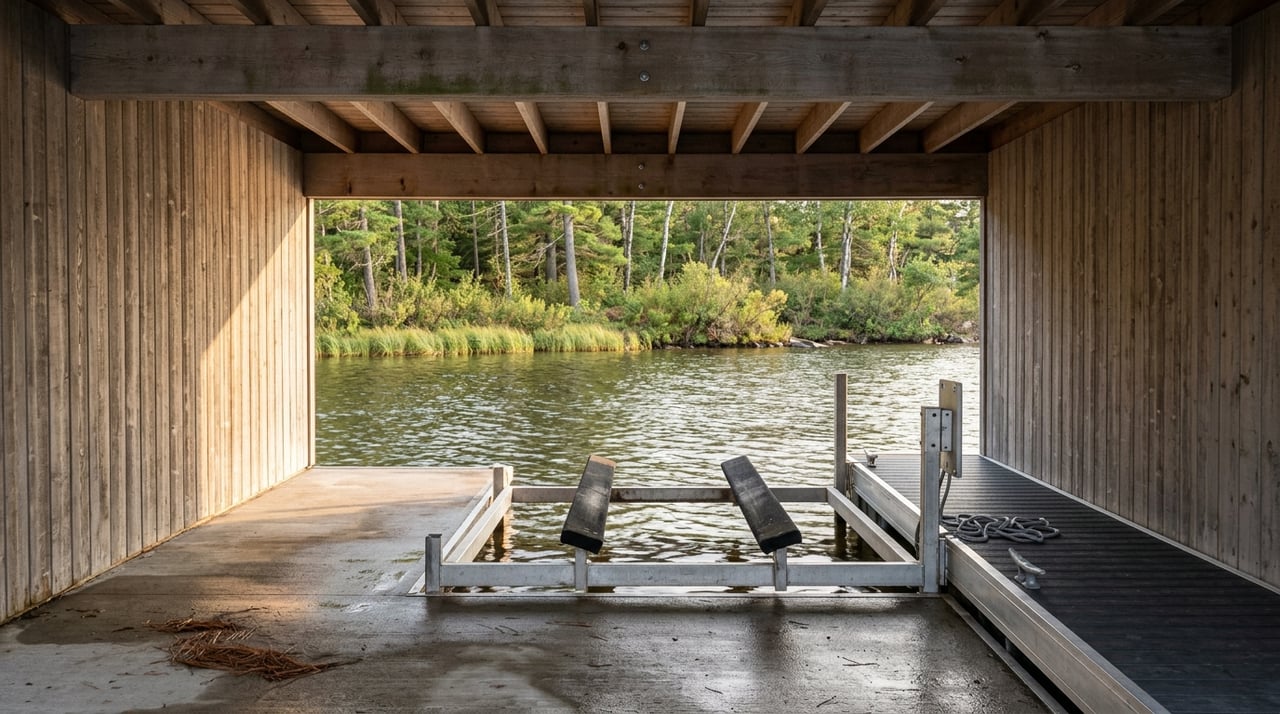
On a luxury lake property, the dock and lift are part of the ownership experience. Otter Tail County’s ordinance says only a riparian owner may place a dock, pier, wharf, or boatlift in public water. The equipment must remain within the owner’s riparian zone, avoid obstructing navigation, and maintain a five-foot setback from adjacent riparian zones.
That makes boundary clarity important. If the current setup sits close to a side line or appears to angle across shared frontage, ask questions. Dock placement is not just a seasonal detail. It affects access, neighbor relationships, and compliance.
Used docks and lifts also bring another checklist item. Otter Tail County states that Minnesota law requires docks and lifts to remain dry for 21 days before being moved to another body of water, and the county asks sellers to register transfers with origin, destination, and removal date information. If shoreline equipment is part of the deal, make sure you understand what is included and whether any transfer steps still need to happen.
Ask About Water Structures
High-end lake homes sometimes include extras like swim rafts or temporary platforms. In Otter Tail County, if you plan to place any structure in public waters for more than one day, from sunrise to sunset, the county says you must first obtain a permit from the Sheriff. The county also states that temporary structures must not block navigation, interfere with neighboring access, or create safety or habitat problems.
This may sound like a small detail, but it can shape how you use the waterfront. If water amenities are part of your ideal setup, confirm what is currently permitted and what future placement may require.
Use the Right Local Experts
Luxury lake purchases work best when you build the right team early. The DNR states that local zoning authorities administer shoreland regulations and recommends speaking with local planning and zoning before making plans. It also notes that surveyors can help define bluffs and local staff can explain setbacks and other limits.
In practical terms, that means your due diligence may involve a county zoning conversation, a surveyor, a septic inspector, and a permitted dock or lift contractor. If you are buying for lifestyle, investment, or future development flexibility, those conversations can protect both your budget and your expectations.
Check Rental Potential Carefully
If you are considering income potential, do not assume every luxury lake home can function as a short-term rental without extra steps. Otter Tail County allows vacation home rentals in shoreland areas only when county conditions are met. The ordinance says there can be no more than two dwelling units on the property, occupancy is limited by the license issued by Public Health, parking must be fully contained on the property, the property must have a current county lodging license, and all dwelling units must be connected to a compliant septic system or municipal sewer.
The county’s vacation rental guidance adds more practical checkpoints. A certified lab water test is required for nitrates and coliform bacteria, and septic compliance is part of the process. The county also states that an existing septic compliance certificate is valid for three years, while a new system certificate is valid for five years unless a public health concern requires earlier action.
This is why rental potential should be verified, not assumed. A strong rental candidate is not just attractive. It also needs workable parking, clear operating compliance, and systems that support licensing.
Your Pelican Lake Buyer Checklist
If you want a simple luxury-home due diligence list, start here:
- Review DNR LakeFinder data before touring
- Compare shoreline location with public access points
- Inspect vegetation, erosion, and shoreline condition
- Evaluate slope, bluff presence, and water access ease
- Confirm county shoreland rules for future improvements
- Verify view-corridor and privacy realities
- Check setbacks for accessory structures or guest space
- Review impervious coverage before planning hardscape
- Confirm riparian boundaries for dock and lift placement
- Ask about used dock or lift transfer requirements
- Verify any water-structure permit needs
- Confirm septic and rental licensing rules if income matters
A Pelican Lake luxury purchase should feel exciting, but it should also feel informed. When you understand the shoreline, the rules, and the property’s true long-term flexibility, you can buy with much more confidence.
If you are comparing Pelican Lake properties and want a local lake specialist who understands shoreline details, luxury positioning, and the lifestyle side of the search, connect with Monica Kaiser for thoughtful guidance tailored to your goals.
FAQs
What should luxury buyers review before touring a Pelican Lake home?
- Start with Minnesota DNR LakeFinder data, shoreline location, public access proximity, and the property’s slope, vegetation, and water access conditions.
What shoreland rules apply to Pelican Lake property in Otter Tail County?
- Otter Tail County administers shoreland rules within 1,000 feet of the lake’s ordinary high-water level, and those rules affect structures, decks, septic systems, additions, and other improvements.
What should buyers inspect along the shoreline of a Pelican Lake luxury home?
- Look for natural vegetation, erosion, ice damage, altered shoreline conditions, slope challenges, and any signs that future stabilization or permits may be needed.
What dock and lift questions matter for a Pelican Lake purchase?
- Confirm riparian boundaries, setback compliance, whether the current setup stays within the riparian zone, and whether any included used dock or lift must meet transfer and drying requirements.
Can a Pelican Lake luxury home be used as a vacation rental?
- It may be possible if the property meets Otter Tail County conditions for vacation home rentals, including licensing, parking, occupancy, water testing, and compliant septic or sewer connections.
Why does slope matter when buying a luxury home on Pelican Lake?
- Slope can affect erosion risk, water access, maintenance, buildable area, and whether bluff-related shoreland limitations apply to future improvements.